
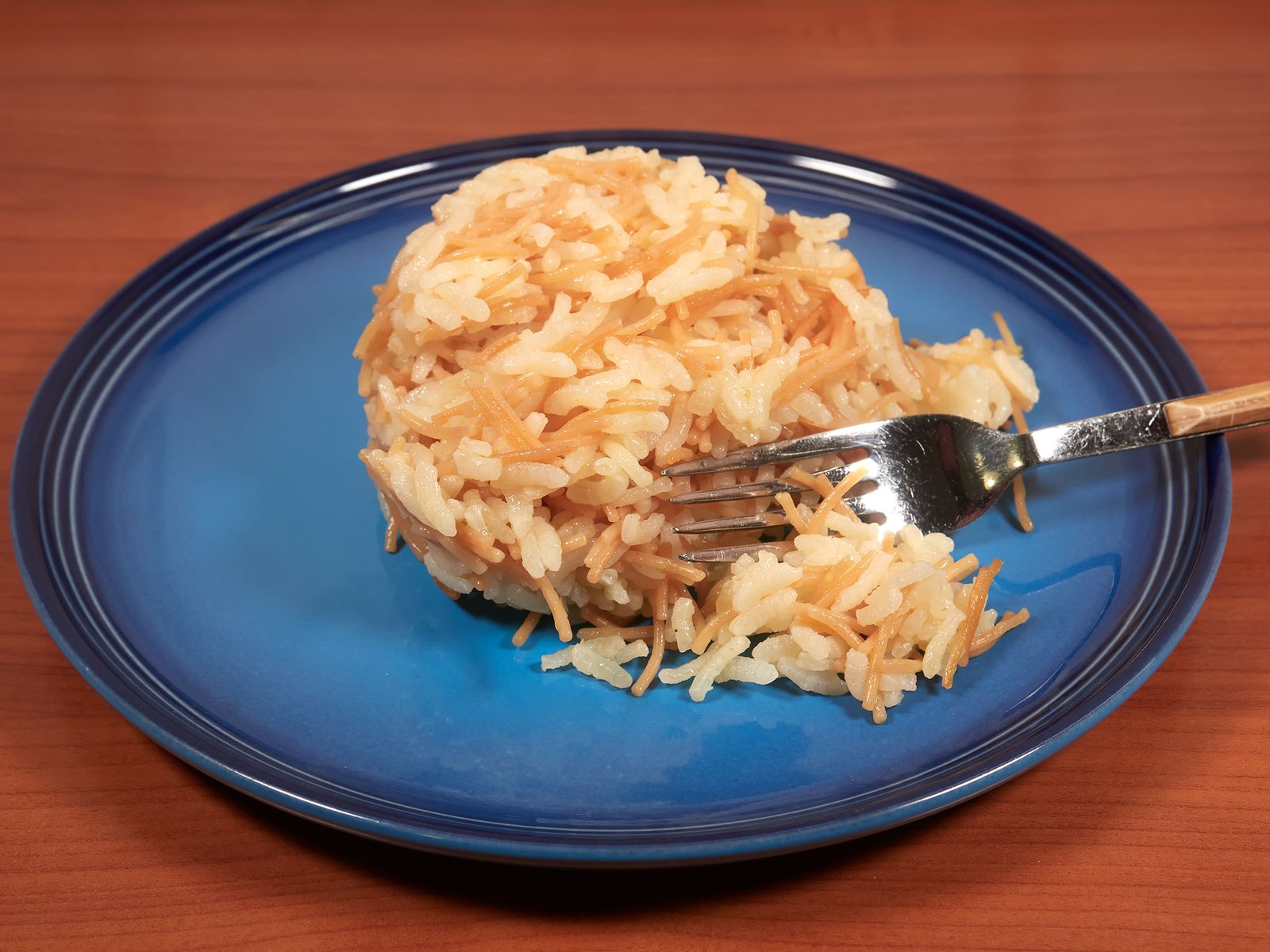
I first had this rice in a Turkish restaurant, served alongside Adana kebab. It immediately caught my attention: the grains of rice were nicely separated, with small pieces of toasted vermicelli scattered throughout.
It is a very simple side dish, but one that can be almost as interesting as the main course. In Turkish restaurants, pilaf is sometimes served separately, on its own plate, rather than simply placed next to the meat.
Since we can easily buy kafta and Adana kebab from a butcher near us, we decided to try making the rice at home as well. It turned out very well and, after a few attempts, became one of the side dishes we now make quite regularly.
So here is our version of Turkish rice pilaf with toasted vermicelli.
What is şehriyeli pilav?
Şehriyeli pilav means pilaf made with şehriye, a general Turkish term for small pasta. In this version, thin, short pieces of vermicelli are used.
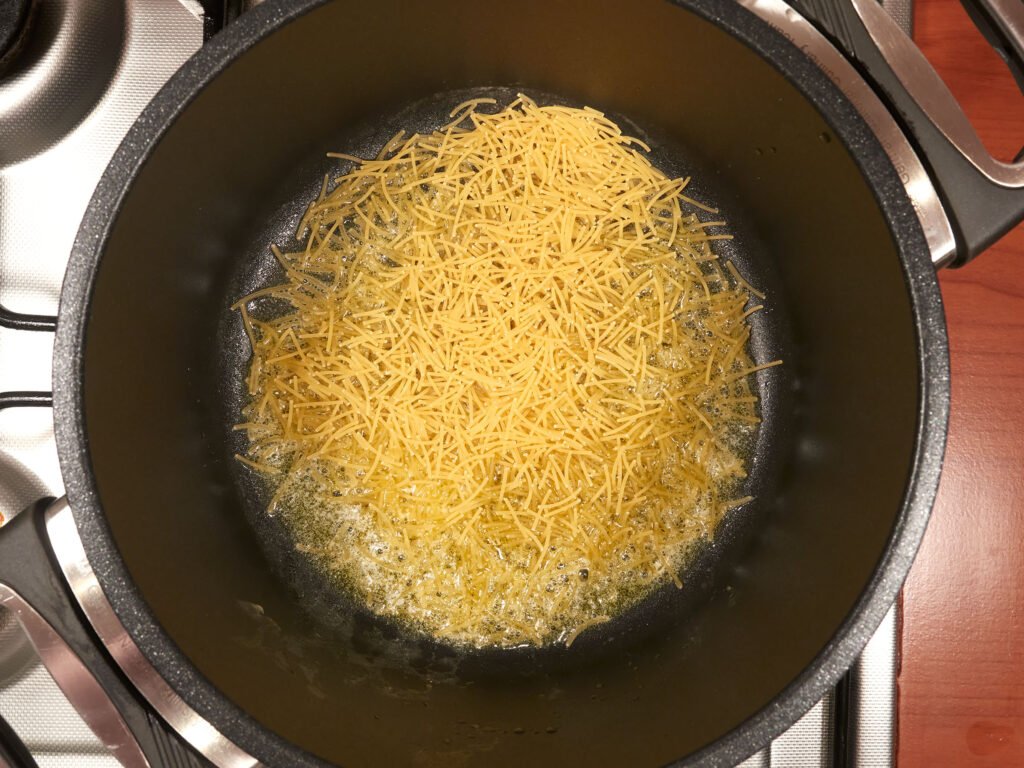
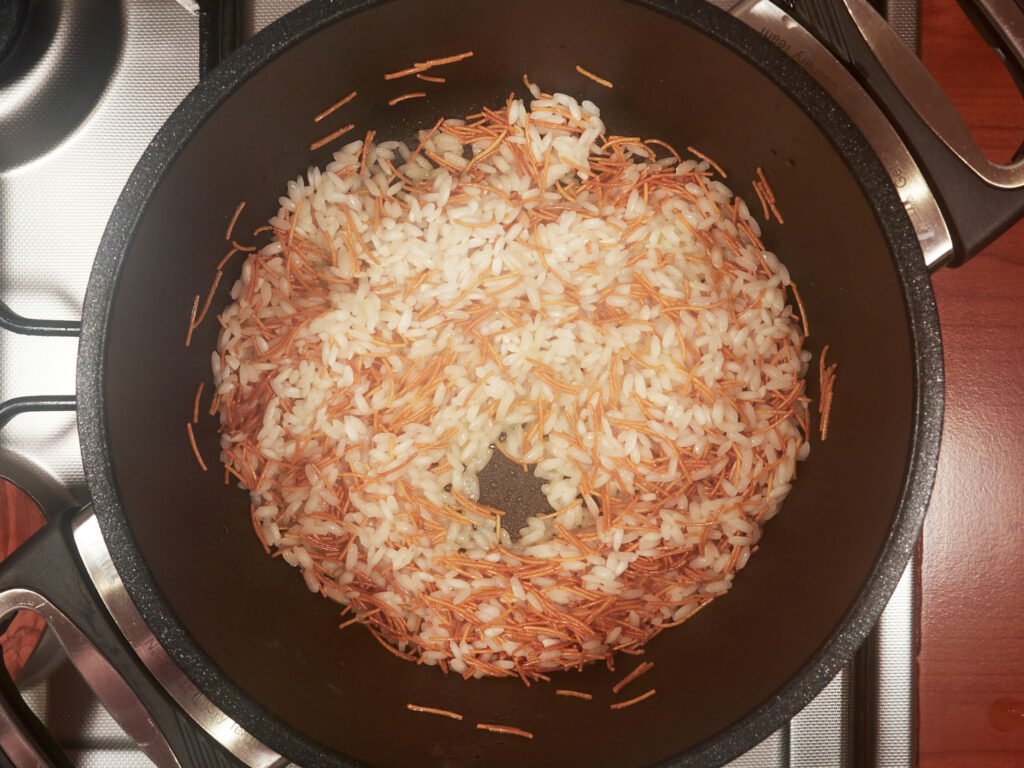
The vermicelli are actually what makes this otherwise simple rice dish so interesting. Before the rice goes into the pot, the pasta is toasted in fat until it turns a deep golden brown. This step requires some attention: at first, very little seems to happen, but once the vermicelli start changing color, they brown very quickly.
Toasting is important for more than appearance. It gives the pasta a nutty, roasted flavor that carries through the entire dish. Once the vermicelli have reached the right color, the rice is added and briefly sautéed in the fat before the cooking liquid goes in.
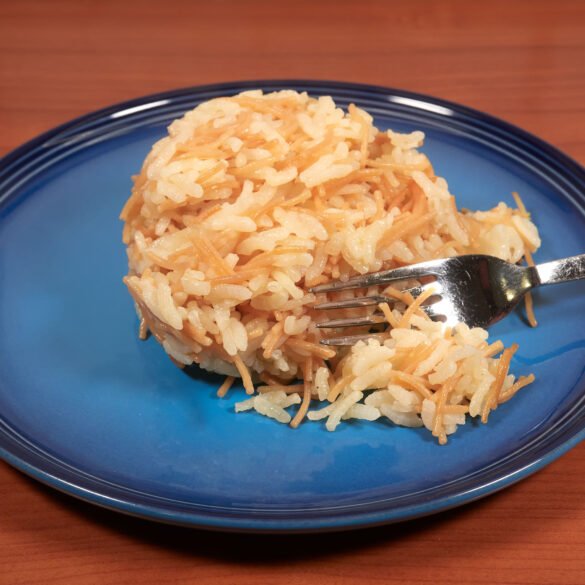
The finished pilaf should be light and fluffy, with distinct grains of rice and darker pieces of toasted vermicelli scattered throughout. There are very few ingredients involved. The result depends much more on technique and on getting the rice-to-liquid ratio right.
Although we first discovered it in a Turkish restaurant, rice with vermicelli is found in many Middle Eastern cuisines. In Turkey it is known as şehriyeli pilav, while closely related Middle Eastern dishes are commonly known as riz bi sha’riyyeh.
Şehriye, vermicelli and other small pasta
For this recipe, we use Panzani Vermicelli. They are very thin durum-wheat pasta, already cut into short pieces of just the right size for this pilaf.
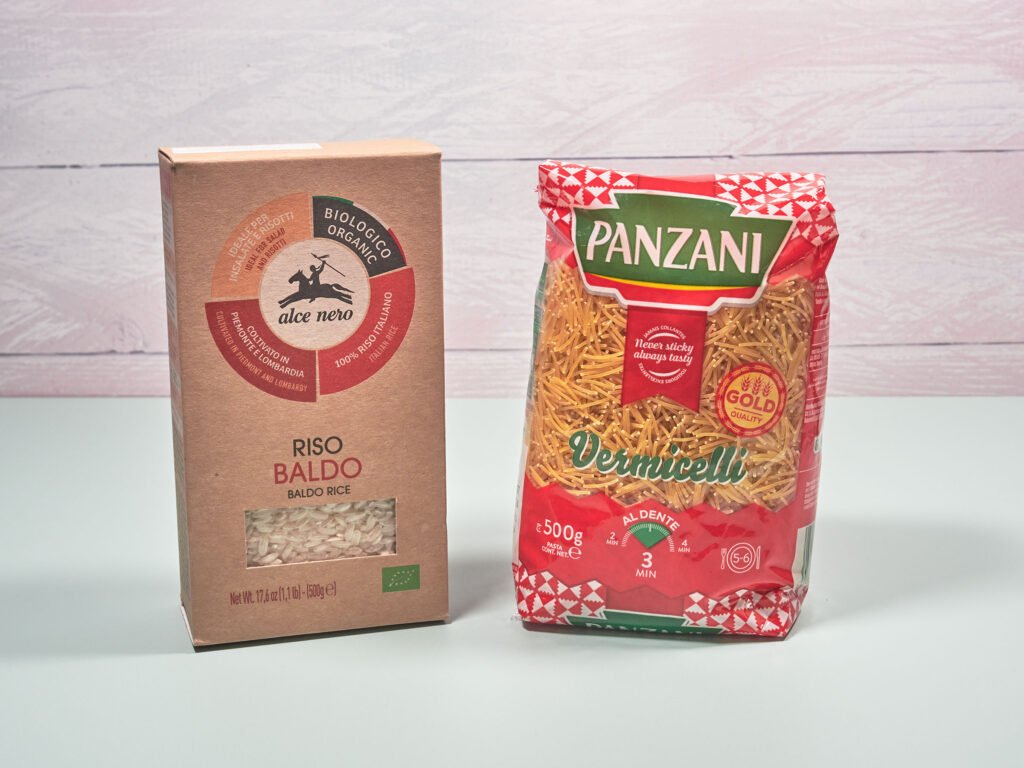
The brand itself is not important. Any short, thin wheat vermicelli of a similar size should work.
In Turkey, this type of pasta is called tel şehriye. Another common option is arpa şehriye, a small rice-shaped pasta similar to orzo or risoni. We prefer vermicelli for this particular recipe. We have tried making the pilaf with orzo as well, but liked the vermicelli version better.
The only tricky part is the toasting. Vermicelli brown very quickly and should be stirred almost continuously. As soon as they reach a deep golden-brown color, the rice should be added. If the pasta burns, even slightly, the bitter flavor will carry through the whole pot.
The rice
In Turkey, Baldo rice is commonly used for pilaf. It has large, plump grains that hold their shape well when cooked. We use Alce Nero Baldo rice, and the quantities in this recipe have been adjusted specifically for this rice.
For a good pilaf, the aim is to keep the grains separate rather than produce the creamy texture associated with risotto. This is why washing the rice is important: it removes much of the loose starch from the grains’ surfaces.
The rice is placed in a bowl of cold water and gently rubbed between the fingers. The water is changed, and the process repeated two or three times. Finally, the rice is rinsed in a sieve. There is no need to continue until the water is perfectly clear; slightly cloudy water is fine.
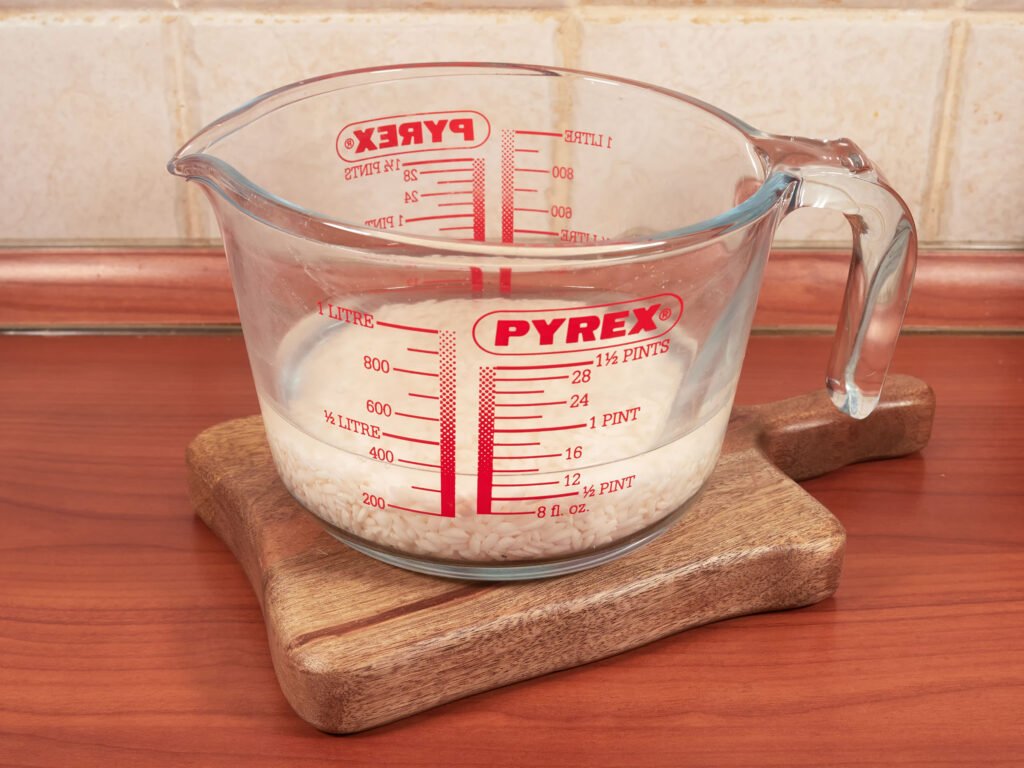
After washing, the rice should be allowed to drain thoroughly. When it is added to the toasted vermicelli, it is cooked in the fat for another minute or two before the liquid is added.
If Baldo is unavailable, another rice suitable for pilaf can be used. Basmati is a particularly easy option if the main objective is well-separated grains, although its texture and aroma are different and the amount of cooking liquid will need to be adjusted.
Arborio is not my preferred substitute for this recipe. Although it can certainly be used to make rice pilaf, its high starch content makes it better suited to dishes such as risotto, where a creamy consistency is desirable.
The rice is not soaked for this recipe. Soaking is a perfectly valid technique and is common in many Middle Eastern rice recipes, but soaked rice requires a different amount of cooking liquid because the grains have already absorbed some water. The quantities below are therefore intended specifically for Baldo rice that has been washed and thoroughly drained, but not soaked.
Fat, cooking liquid and salt
We use olive oil and butter together from the beginning. The butter provides much of the characteristic flavor, while the olive oil allows us to use a little less butter. The heat should remain low so the vermicelli browns evenly without burning the milk solids in the butter.
For the cooking liquid, we usually use vegetable stock. Since stock is already seasoned, its salt content should be taken into account. A small amount of vegetable stock concentrate can also be used if necessary, but it should not be so strong as to overwhelm the flavor of the toasted vermicelli and butter.
Plain water also works perfectly well. When using water, salt is added at the same time as the water.
The cooking liquid is added hot. This allows the contents of the pot to return to a boil quickly and makes the cooking process more predictable.
Two important rules
Do not lift the lid while the rice is cooking. The rice cooks in both the liquid and the steam trapped inside the pot. Once the lid is on and the heat has been reduced, the pot should be left undisturbed until the cooking time is over.
Let the rice rest. Once the heat is turned off, the pot should remain covered for another 15–20 minutes. During this time, the remaining moisture redistributes throughout the rice, and its texture becomes more uniform. Only then should the lid be removed and the pilaf gently fluffed with a fork.
The difference is noticeable. Straight from the heat, the rice may still seem slightly wet and sticky. After resting, the grains separate much more easily.
Another useful trick is to place a clean kitchen towel or a few sheets of paper towel between the pot and the lid while the rice rests. This absorbs condensation that would otherwise collect on the lid and drip back onto the rice.
If using a kitchen towel, make sure its edges remain well away from a gas flame or any other hot surface.
ad
Ingredients
- 1 cup Baldo rice (rinsed and drained)
- 2 tablespoons vermicelli
- 1 tablespoon oil
- 1 teaspoon butter
- 2 cups hot water or hot vegetable stock
- salt, to taste (do not add salt if using vegetable stoick)
Instructions
Thoroughly wash the rice and left it to drain in a sieve.
In a heavy-bottomed saucepan, heat the oil and butter over low heat. Once the butter has melted, add the vermicelli and stir continuously. Within a few minutes, they will turn from pale yellow to golden and then brown. The right color is that of toasted hazelnuts; from this point, they can burn very quickly. Do not burn them, as this will give a bitter taste to the rice.
Immediately add the well-drained rice and stir for 1–2 minutes, allowing the grains to mix thoroughly with the fat and toasted vermicelli.
Carefully pour in the hot liquid. If using water, add the salt at this point. Stir once and cover with a lid.
Increase the heat until the liquid comes to a boil, then reduce it to the lowest setting. Cook the rice, covered, for 12–15 minutes, without lifting the lid.
Turn off the heat and move the saucepan away from the hot burner. Place a clean kitchen towel or a few sheets of paper towel between the saucepan and the lid, and leave the pilaf to rest for 15–20 minutes.
Finally, remove the towel and gently fluff the rice with a fork, lifting and separating the grains without crushing them. Taste and add more salt only if needed.
Serve the pilaf hot alongside Adana kebab, kafta, grilled skewers or other grilled meat dishes.
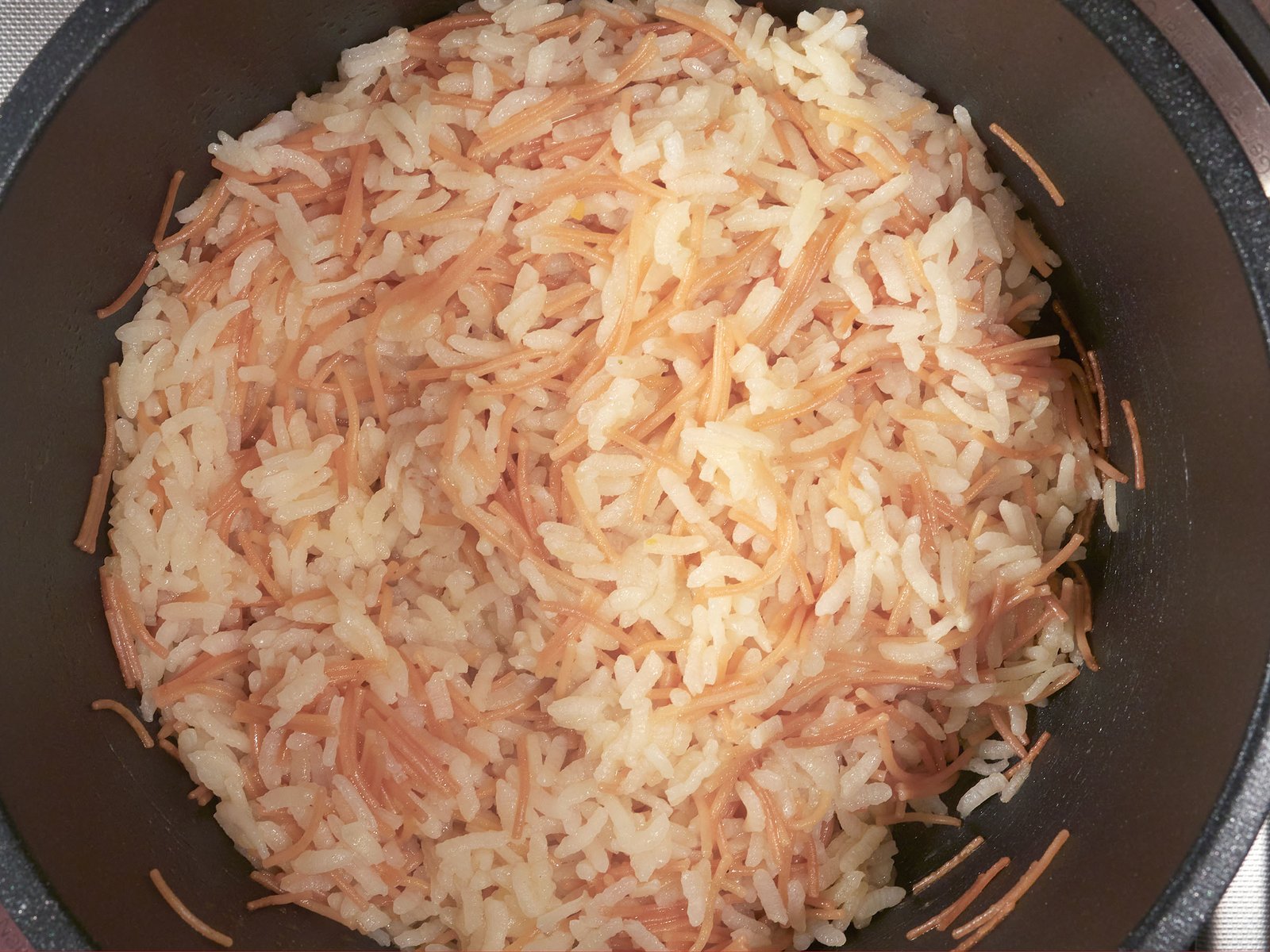
Rice pilaf with toasted vermicelli, fully cooked
Notes
Use the same cup to measure both the rice and the liquid.
In this recipe, the rice-to-liquid ratio is 1:2 by volume — one cup of rice to two cups of liquid — and it works for the Baldo rice used here, washed but not soaked. However, this ratio is not universal. The amount of liquid required depends on the variety of rice, whether it has been soaked, the type of pot and even the intensity of the simmer. Other types of rice may require less liquid. Basmati, for example, generally needs less liquid than the amount used here for Baldo.